Spider Plant Care Indoors in India is simple when you understand the plant’s natural growing conditions and provide the right balance of light, water, and humidity. The Spider Plant (Chlorophytum comosum) is one of the easiest indoor plants to grow, making it a perfect choice for beginners, apartment dwellers, and anyone looking to create a greener home.
Growing a vibrant spider plant inside an Indian home is straightforward once you align its routine with local climate patterns. Whether you live in a coastal apartment in Mumbai or experience dry summers in Delhi, this resilient plant adapts quickly when you balance sunlight, moisture, and airflow.
Practical Indoor Care Routine
Having grown Chlorophytum comosum across different Indian seasons, the key to success lies in avoiding extreme conditions rather than fussing over daily maintenance.
- Place the pot near an east-facing window where it receives gentle morning sun, or in a bright spot shielded from harsh afternoon rays.
- Water only when the top two inches of soil feel completely dry to the touch, as waterlogging quickly causes root rot in tropical humidity.
- Use a well-draining potting mix containing garden soil, coco peat, and perlite or coarse sand in equal measures.
- Maintain ambient indoor humidity during dry winter or peak summer months by grouping plants together or setting the pot on a pebble tray filled with water.
Seasonal Adjustments Across India
Different regions in India require slight tweaks to your plant care strategy:
| Region / Season | Sunlight Strategy | Watering Schedule |
|---|---|---|
| Monsoon (All regions) | Bright indirect light; ensure good room ventilation | Reduce significantly; check soil moisture weekly |
| North Indian Summers | Keep away from hot window glass and dry heat waves | Water deeply every 2–3 days when soil dries out |
| Coastal Regions | Bright filtered light year-round | Moderate watering; ensure pots have clear drainage holes |
| North Indian Winters | Shift closer to soft direct sunlight for warmth | Water sparingly; pause regular fertilizing until spring |
In this complete guide, you’ll learn everything about Spider Plant Care Indoors in India, including watering, sunlight, soil, fertilizer, humidity, propagation, common problems, and practical tips based on indoor gardening experience.
Table of Contents
What is a Spider Plant?
The Spider Plant (Chlorophytum comosum) is a popular evergreen houseplant native to tropical and southern Africa. It is widely appreciated for its graceful green leaves with white stripes and its ability to produce baby plants called “plantlets.”
If you’re interested in learning more about its botanical background, you can read the Wikipedia article on Spider Plant:
https://en.wikipedia.org/wiki/Chlorophytum_comosum
Today, Spider Plants are among the most recommended indoor plants because they adapt well to homes, require minimal care, and are suitable for beginners.
Why Choose Spider Plant Care Indoors in India?
Many indoor plants struggle when grown inside Indian homes due to fluctuating temperatures and varying humidity levels. However, Spider Plant Care Indoors in India is relatively easy because this plant tolerates a wide range of indoor environments.
Spider Plants are an excellent choice because they:
- Require very little maintenance
- Adapt well to apartments
- Grow beautifully in containers
- Produce attractive baby plants
- Are suitable for beginners
- Thrive in indirect sunlight
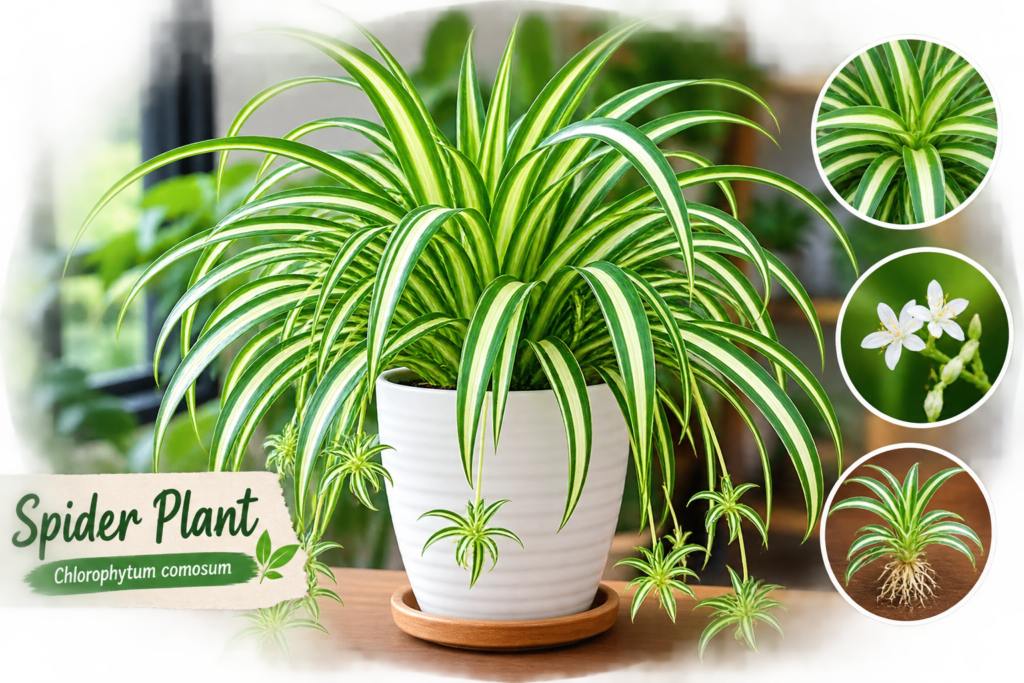
If you’re just starting your indoor gardening journey, you may also like our guide on Indoor Plant Care for Beginners, where we explain the basic principles of growing healthy houseplants.
My Experience Growing Spider Plants Indoors
When I first started growing indoor plants, I wanted something that would survive occasional mistakes while still looking attractive throughout the year. The Spider Plant quickly became one of my favorites.
While caring for indoor plants in Indian home conditions, I noticed that Spider Plants adjusted much faster than many flowering houseplants. Even after forgetting to water them for a few days, they recovered well once watered properly.
I also learned that placing the plant near a bright window with indirect sunlight encouraged healthier leaves and more baby plantlets than keeping it in dark corners.
One important lesson I learned was that overwatering caused more problems than underwatering. After reducing my watering frequency and improving drainage, the plant became noticeably healthier.
These practical observations have helped shape the recommendations shared in this guide.
Spider Plant Benefits
Spider Plants are not only attractive but also offer several practical advantages for indoor gardeners.
1. Beginner-Friendly Plant
If you’re looking for your first indoor plant, the Spider Plant is one of the safest choices because it tolerates minor care mistakes.
2. Beautiful Decorative Appearance
Its long arching leaves create an elegant display in:
- Living rooms
- Bedrooms
- Offices
- Study rooms
- Shelves
- Hanging baskets
3. Produces Baby Plants
One of the most exciting features of Spider Plants is that mature plants naturally produce baby plantlets.
These can easily be propagated into new plants without purchasing additional ones.
4. Easy Maintenance
Unlike many flowering plants, Spider Plants don’t require constant pruning, complicated fertilizing schedules, or daily attention.
Spider Plants are commonly included in lists of indoor plants known for improving indoor environments.
5. Popular Air-Purifying Houseplant
You can also explore our detailed guide on Plants That Purify Air at Home, where we compare several beginner-friendly indoor plants suitable for Indian homes.
Best Location for Spider Plants Indoors
Choosing the right location is one of the most important parts of Spider Plant Care Indoors in India.
The ideal location should receive bright but indirect sunlight throughout the day.
Good locations include:
- Living room near a window
- Bedroom with filtered sunlight
- Home office desk
- Bright hallway
- Dining room corner
- Covered balcony
Avoid placing Spider Plants:
- Under harsh afternoon sunlight
- Near heating appliances
- Close to air conditioners
- In completely dark rooms
Finding the right balance between light and protection from harsh sun helps maintain vibrant green leaves.
Spider Plant Sunlight Requirements
One of the most common questions beginners ask is:
How much sunlight does a Spider Plant need?
Spider Plants grow best in bright indirect light.
Ideal Conditions
✔ Bright indirect sunlight
✔ Filtered morning sunlight
✔ Partial shade
Too Much Sunlight
Excessive direct sunlight may cause:
- Brown leaf tips
- Leaf scorching
- Faded foliage
Too Little Light
Insufficient light can result in:
- Slow growth
- Pale leaves
- Smaller plantlets
Although Spider Plants tolerate low-light conditions better than many houseplants, moderate indirect sunlight encourages faster and healthier growth.
Best Soil for Spider Plants
Healthy roots begin with healthy soil.
Spider Plants prefer loose, nutrient-rich, and well-draining potting mix.
Recommended Potting Mix
| Ingredient | Percentage |
|---|---|
| Garden Soil | 40% |
| Cocopeat | 30% |
| Compost | 20% |
| Perlite or Sand | 10% |
This combination:
- Improves drainage
- Prevents root rot
- Retains adequate moisture
- Supports healthy root development
For a more detailed explanation of indoor potting mixes, read our guide on Best Soil for Indoor Plants in India, where we explain how different soil components affect plant health.
Spider Plant Watering Tips
Watering is one of the most important aspects of Spider Plant Care Indoors in India.
Spider Plants prefer slightly moist soil but dislike standing water.
Summer
Water approximately every 3–5 days, depending on temperature and soil moisture.
Winter
Water every 7–10 days or when the top inch of soil feels dry.
Always check the soil before watering instead of following a fixed schedule.
You can also read our complete guide on How Often Should You Water Indoor Plants? to understand how watering requirements change with seasons, humidity, and pot size.
Fertilizer Guide for Spider Plants
Although Spider Plants are low-maintenance, regular feeding encourages lush green foliage and faster growth. Over-fertilizing, however, can damage the roots and cause brown leaf tips.
Best Fertilizers for Spider Plants
You can use:
- Vermicompost
- Organic compost
- Seaweed fertilizer
- Balanced liquid fertilizer (NPK 10-10-10 or similar)
- Homemade compost tea
Fertilizing Schedule
| Season | Frequency |
|---|---|
| Spring | Once every 4 weeks |
| Summer | Once every 4–6 weeks |
| Monsoon | Once every 5–6 weeks |
| Winter | Once every 8 weeks |
Always water the soil before applying liquid fertilizer to avoid root burn.
Temperature and Humidity Requirements
Spider Plants grow best in moderate indoor temperatures commonly found in Indian homes.
Ideal Temperature
- 18°C–30°C
Ideal Humidity
- 40%–70%
If your home is very dry, especially during summer, you can:
- Mist the leaves once or twice a week.
- Place a tray of water with pebbles beneath the pot.
- Group indoor plants together to naturally increase humidity.
Avoid placing the plant directly under air conditioners or near heaters, as sudden temperature changes can stress the plant.
How to Repot a Spider Plant
Spider Plants develop thick roots and eventually outgrow their containers.
Signs Your Spider Plant Needs Repotting
- Roots growing out of drainage holes
- Soil dries too quickly
- Plant becomes root-bound
- Slow growth
- Pot starts cracking because of thick roots
Repotting Steps
- Select a pot that is 1–2 inches larger than the current one.
- Prepare fresh, well-draining potting mix.
- Carefully remove the plant without damaging the roots.
- Trim any unhealthy or rotten roots.
- Place the plant in the new pot.
- Fill with fresh soil and water thoroughly.
How to Propagate Spider Plants
One of the most rewarding parts of Spider Plant Care Indoors in India is propagation.
Healthy mature plants produce baby plantlets that can easily grow into new plants.
Method 1: Propagation from Plantlets
- Wait until the baby plant develops small roots.
- Cut it from the mother plant.
- Plant it in moist potting mix.
- Keep it in indirect sunlight.
- Water lightly until new growth appears.
Method 2: Division
- Large Spider Plants can also be divided during repotting.
- This method creates multiple healthy plants while reducing overcrowding.
Common Spider Plant Problems and Solutions
Even though Spider Plants are hardy, beginners may occasionally face a few common issues.
| Problem | Possible Cause | Solution |
|---|---|---|
| Brown Leaf Tips | Low humidity, excess fertilizer, fluoride in water | Increase humidity, reduce fertilizer, use filtered or stored water |
| Yellow Leaves | Overwatering | Allow soil to dry before watering again |
| Drooping Leaves | Underwatering or root-bound plant | Water thoroughly or repot if necessary |
| Slow Growth | Poor light or nutrient deficiency | Move to bright indirect light and fertilize monthly |
| Root Rot | Poor drainage | Repot using fresh, well-draining soil |
If you’re experiencing similar issues with other houseplants, you may also find our guide on Common Indoor Plant Problems and Their Solutions helpful.
Spider Plant Care During Indian Summers – Spider Plant Care Indoors in India
Summer temperatures in many parts of India can become extremely high, so a few extra precautions are necessary.
Summer Care Checklist
✔ Move the plant away from harsh afternoon sunlight.
✔ Increase watering only when the topsoil becomes dry.
✔ Improve air circulation.
✔ Mist occasionally if the air is very dry.
✔ Keep the plant indoors during heatwaves.
Avoid leaving Spider Plants on balconies where temperatures exceed 35°C for long periods.
Spider Plant Care During Indian Winters – Spider Plant Care Indoors in India
Spider Plants generally perform well during Indian winters.
Winter Care Tips
- Reduce watering frequency.
- Keep the plant near bright windows.
- Avoid cold drafts during chilly nights.
- Stop excessive fertilization.
Growth naturally slows during winter, which is completely normal.
Monthly Spider Plant Care Calendar – Spider Plant Care Indoors in India
| Month | Main Care Task |
|---|---|
| January | Light watering and bright light |
| February | Check for new growth |
| March | Begin regular fertilizing |
| April | Monitor watering frequency |
| May | Protect from harsh afternoon sun |
| June | Improve drainage during monsoon |
| July | Watch for fungal problems |
| August | Light pruning if needed |
| September | Fertilize once |
| October | Repot if roots are crowded |
| November | Reduce watering gradually |
| December | Maintain bright indirect light |
Beginner Mistakes to Avoid – Spider Plant Care Indoors in India
Many new plant owners unintentionally make mistakes that affect the health of their Spider Plants.
Avoid these common errors:
- Watering on a fixed schedule instead of checking soil moisture.
- Keeping the plant in complete darkness.
- Using heavy clay soil without drainage.
- Applying excessive fertilizer.
- Choosing pots without drainage holes.
- Ignoring brown leaf tips until they spread.
Simple adjustments often solve these problems before they become serious.
Frequently Asked Questions – Spider Plant Care Indoors in India
Is Spider Plant good for Indian homes?
Yes. Spider Plants adapt well to Indian indoor conditions and are excellent for beginners.
How often should I water a Spider Plant?
Water when the top inch of soil feels dry. This is usually every 3–5 days in summer and every 7–10 days in winter, depending on your home’s conditions.
Can Spider Plants grow in low light?
Yes, but bright indirect light promotes healthier leaves and faster growth.
Why are the tips of my Spider Plant turning brown?
Brown tips are commonly caused by low humidity, excess fertilizer, or minerals in tap water.
Final Thoughts – Spider Plant Care Indoors in India
Learning Spider Plant Care Indoors in India doesn’t have to be complicated. With bright indirect sunlight, well-draining soil, moderate watering, and occasional feeding, Spider Plants can remain healthy and attractive throughout the year.
From my own experience with indoor gardening, Spider Plants are among the most forgiving houseplants for beginners. They recover well from small care mistakes, grow beautifully in containers, and reward consistent care with lush foliage and charming baby plantlets. Instead of following a rigid schedule, observe your plant regularly—its leaves, soil, and growth patterns will tell you what it needs.
Whether you’re creating your first indoor garden or expanding your collection, a Spider Plant is a reliable companion that adds freshness and greenery to any home. By following the tips shared in this guide, you’ll be well-equipped to grow a thriving Spider Plant indoors in Indian conditions for many years to come. 🌿
Pingback: Bougainvillea Plant Care in India: Get More Flowers Easily