Snake Plants are often called ‘indestructible,’ but even these tough air-purifiers can struggle in the intense heat of cities like Lucknow. Have you noticed your Snake Plant leaves turning yellow or falling over? If yes, you are not alone. While they are low-maintenance, a few common mistakes in Snake Plant care tips can lead to a quick death.
Many beginners treat them like regular tropical plants, but Snake Plants are succulents that thrive on neglect. In this guide, we will break down the 5 major reasons why your Snake Plant might be dying and provide actionable solutions to bring it back to life during this summer season.
5 Common Reasons Why Your Snake Plant is Dying
1. The Overwatering Trap (Root Rot)
The most common reason for a dying plant is too much water. Snake plants are succulents; they store water in their thick leaves. If you follow improper Snake Plant care tips, like watering every day, the roots will suffocate and rot.
- Signs: Mushy, yellow leaves and a foul smell from the soil.
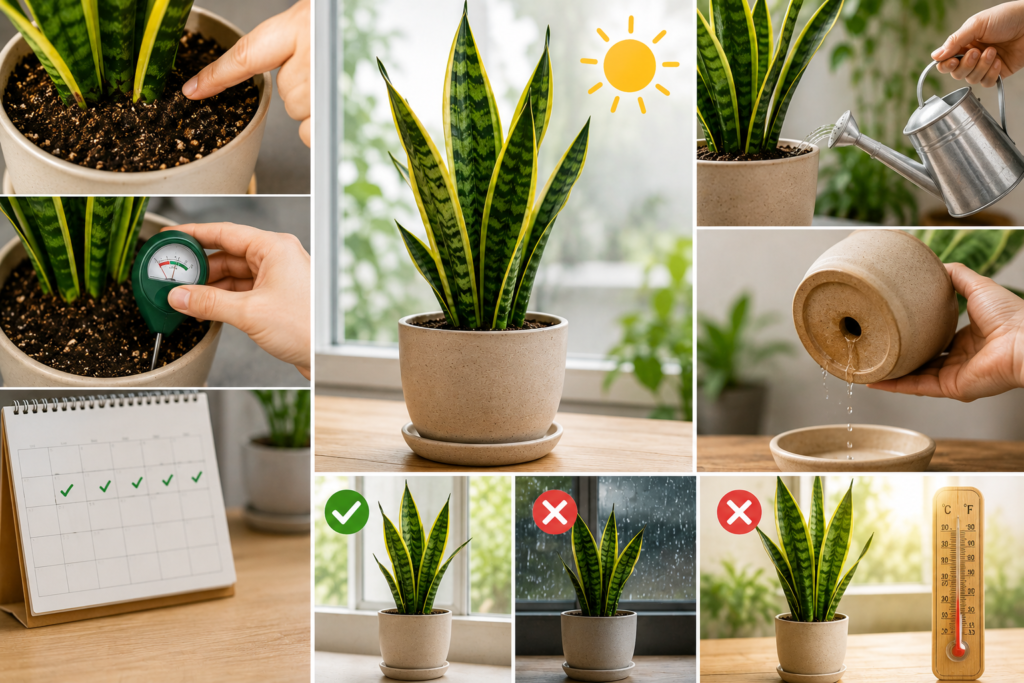
- Solution: Only water when the soil is 100% dry. In Lucknow’s summer, this might be once every 10-14 days.
2. Too Much Direct Afternoon Sunlight
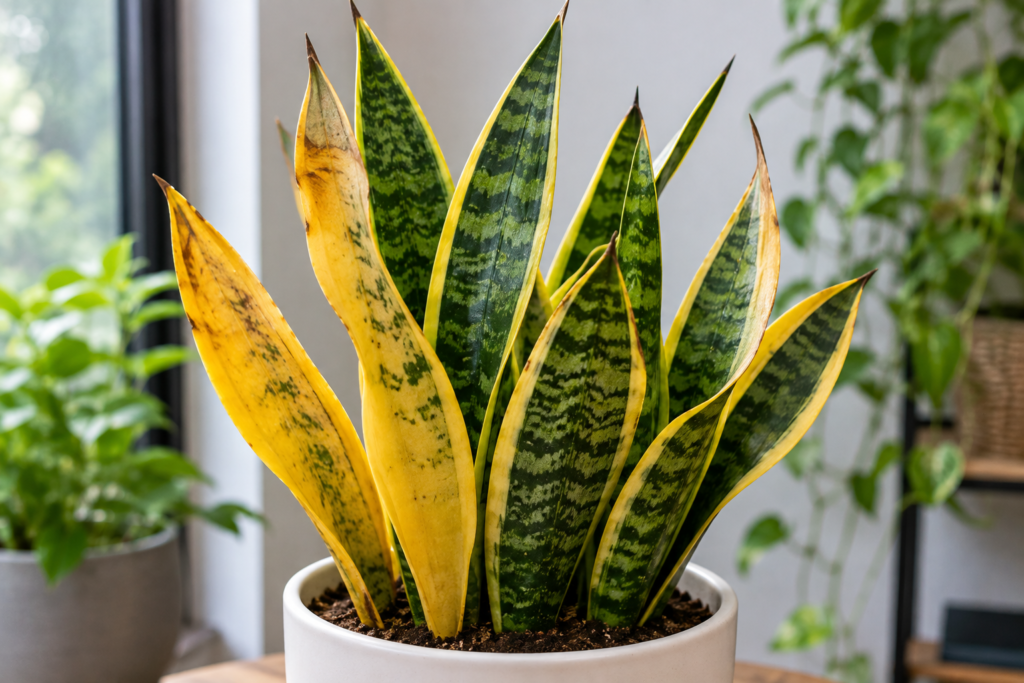
While they can handle some sun, the harsh 45°C+ heat of an Indian summer can “bleach” the leaves. This leads to Snake Plant yellow leaves that look pale and washed out.
- Signs: Yellow or white patches on the leaves that feel dry.
- Solution: Move your plant to a spot with bright indirect light. A north-facing window or a shaded balcony is perfect for Snake Plant care tips.
3. Using the Wrong Potting Mix
If your soil stays wet for more than 3 days, it’s a danger sign. Snake plants need a “chunky” and well-draining soil mix. Standard garden soil is often too heavy and holds too much moisture.
- The Hack: Mix 50% soil with 50% sand or perlite. This ensures the water drains out quickly, which is a crucial part of how to save a dying snake plant.
4. Temperature Shock and AC Vents
Snake plants hate sudden changes. If you move them from a 42°C balcony to a 24°C AC room, they experience “Temperature Shock.” Also, placing them directly under an AC vent dries out the leaves.
- Signs: Leaves falling over or drooping suddenly.
- Solution: Maintain a stable temperature. If you use AC, keep the plant at least 5-6 feet away from the air flow.
5. Pest Infestation (Mealybugs & Spider Mites)
Although rare, summer heat can bring pests. Mealybugs look like tiny cotton balls on the base of the leaves. They suck the sap, leading to Snake Plant yellow leaves and stunted growth.
- Solution: Wipe the leaves with a cotton swab dipped in rubbing alcohol or use a mild neem oil spray.
How to Save a Dying Snake Plant? (Step-by-Step Revive Guide)
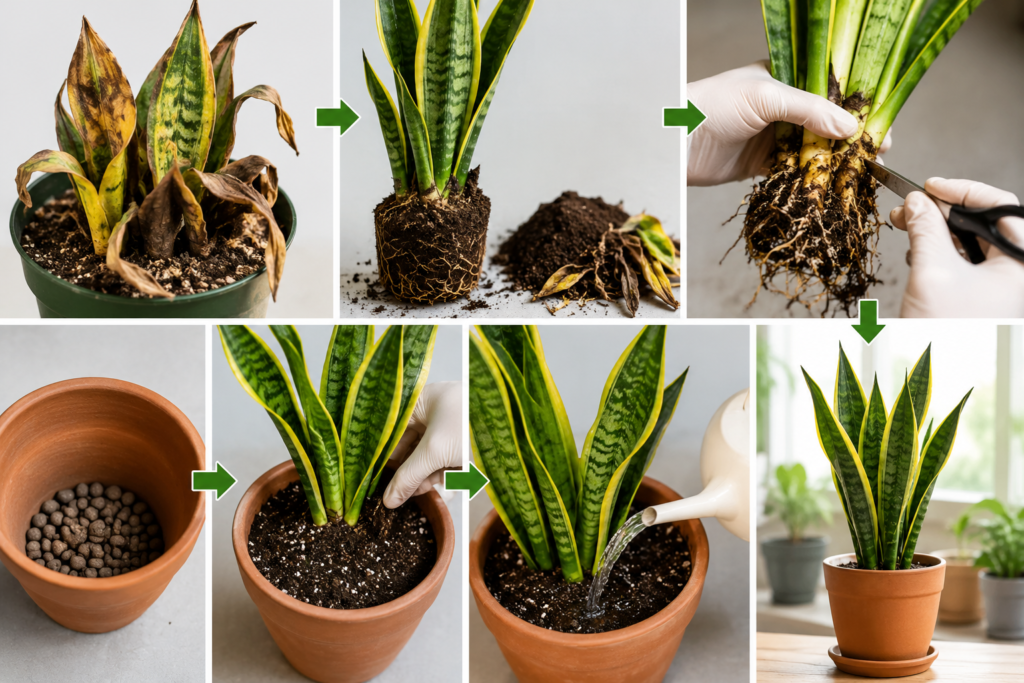
If your plant is already drooping, don’t lose hope. Follow these steps for how to save a dying snake plant:
- Inspect the Roots: Take the plant out of the pot. If the roots are black and mushy, cut them off.
- Air Dry: Let the plant sit in the open air for 24 hours so the cuts can “callus” over.
- Repot in Dry Soil: Use a fresh, dry cactus mix. Do not water it for at least 3-4 days after repotting.
- To understand more about soil moisture, read our guide on Why Indoor Plants Die in Summer and how to balance watering.
Snake Plant Watering Guide Summer
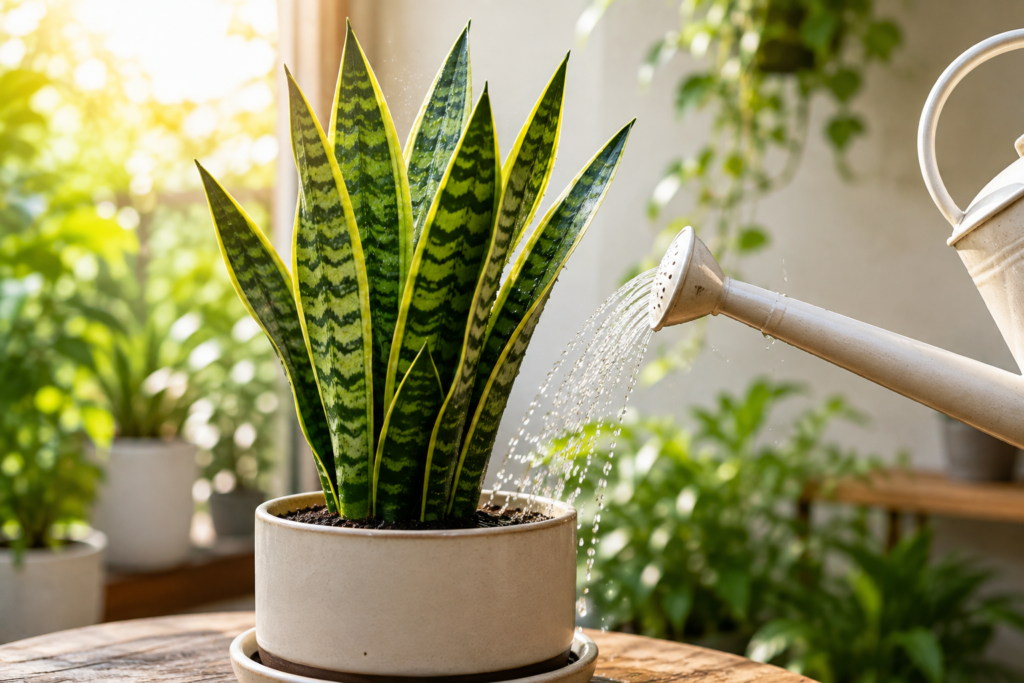
Watering is the soul of Snake Plant care tips. In summer, the evaporation is high, but the plant’s metabolism is slow.
- The Finger Test: Stick your finger 2 inches deep. If it’s bone dry, water it.
- Bottom Watering: Place the pot in a tray of water for 15 minutes. This allows the roots to soak up exactly what they need without wetting the top leaves.
- If you love low-maintenance greenery, you might also like our tips on Aloe Vera plant care in summer which follows a similar watering logic.
Top Benefits of Keeping a Healthy Snake Plant at Home
Beyond its tough nature, the Snake Plant is a powerhouse of health benefits. If you follow the right Snake Plant care tips, this plant will act as a natural air purifier for your home. Unlike most plants, it converts CO2 into oxygen at night, making it the perfect bedroom companion.
- To see where the Snake Plant ranks among other hardy species, check out our list of the 7 Best Low-Maintenance Indoor Plants for Indian Summers.
The Secret to Vibrant Leaves: Avoid Temperature Shock
A major reason for Snake Plant yellow leaves is sudden environmental changes. In cities like Lucknow, we often move plants from a hot balcony to an air-conditioned room. This shock stops the plant’s growth instantly.
- Pro Tip: Keep your plant in a stable environment. If you want to know how to save a dying snake plant from temperature stress, ensure it is not placed directly under an AC vent or near a glass window that traps heat.
1. How often should I be watering snake plant in summer?
In the Indian climate, watering snake plant in summer should only happen once every 10 to 14 days. Always perform the “Finger Test” to ensure the soil is dry deep down. Overwatering is the fastest way to kill this plant.
2. Why are my snake plant leaves turning yellow and soft?
Snake Plant yellow leaves that feel mushy are a classic sign of root rot caused by overwatering. If the leaves are yellow but crispy, it might be due to too much direct sunlight.
3. Can I grow a Snake Plant in just water?
Yes, but it grows much slower. For those interested in hydroponics, learning [how to grow Money Plant in water faster] might be an easier starting point before trying it with Snake Plants.
4. What is the best light for Snake Plant care tips?
The best light is bright, indirect sunlight. While they can survive in low light, they will not grow. Avoid the harsh afternoon sun to prevent leaf burn.
Conclusion: Master Your Snake Plant Care Today
Mastering Snake Plant care tips is the best way to ensure your home remains a green sanctuary. These plants are built to survive, but they rely on you for the right balance of neglect and care. By avoiding the temptation to overwater and protecting them from the scorching Lucknow sun, you can prevent issues like Snake Plant yellow leaves and root rot.
If you are currently struggling with a plant that looks unwell, remember that knowing how to save a dying snake plant starts with checking the roots. Be patient, provide the right environment, and your Snake Plant will reward you with clean air and beautiful vertical greenery for years to come.
For a more scientific look at how these plants filter indoor air toxins, you can read the NASA Clean Air Study results on Wikipedia.