Choosing the best soil for indoor plants in India is the first step toward healthy plant growth. Indoor plants need more than just sunlight and water — the right soil plays a major role in keeping them healthy 🌱. Many beginners make the mistake of using normal garden soil, which can lead to poor drainage, root rot, and slow plant growth. In this guide, you’ll learn the best soil mix for indoor plants in Indian homes and how to create it easily.
Why Indoor Plants Need Special Soil
Indoor plants grow in pots, not open ground. This means their roots need:
- Good drainage
- Air circulation
- Nutrient balance
Regular garden soil becomes compact inside pots, blocking airflow and trapping too much water. That’s why a lighter soil mix is important.
Main Components of Good Indoor Plant Soil
Best soil for indoor plants in india – A proper indoor plant soil mix usually includes:
🌿 Garden Soil – Provides basic structure and nutrients.
🥥 Cocopeat – Helps retain moisture without making the soil heavy.
⚪ Perlite – Improves drainage and keeps soil airy.
Perlite is a lightweight volcanic material that improves soil aeration and drainage.
🍂 Compost – Adds nutrients for plant growth.
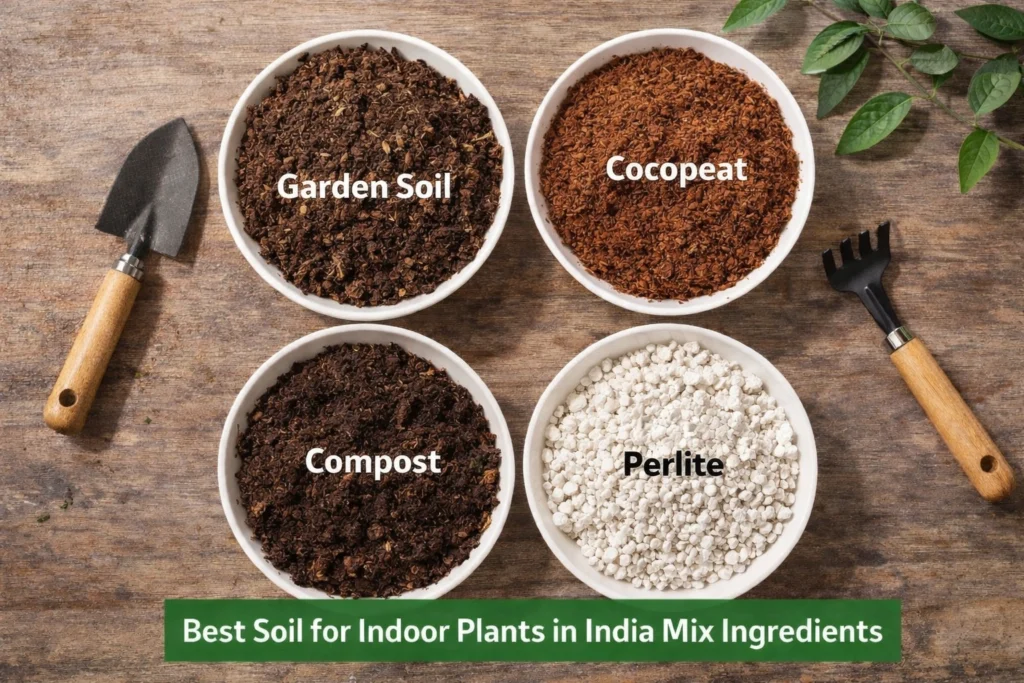
These ingredients work together to create the ideal balance between moisture and airflow.
Best Soil Mix Ratio for Beginners
Here’s a simple beginner-friendly soil mix formula:
40% Garden Soil + 30% Cocopeat + 20% Compost + 10% Perlite
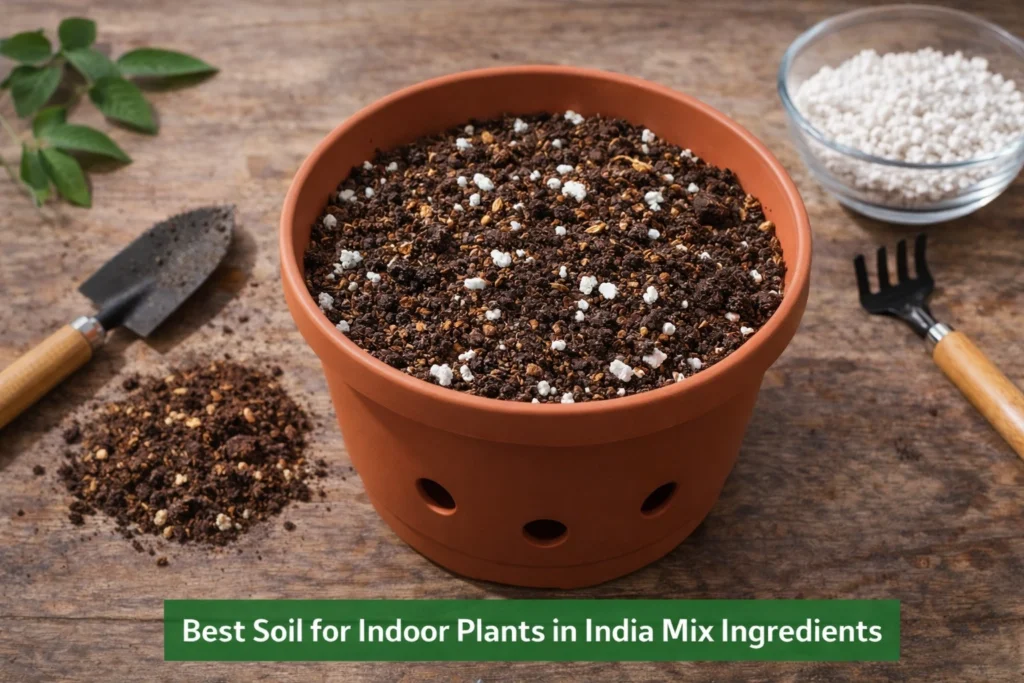
Mix everything properly before adding it to the pot. This mix works well for most common indoor plants like pothos, snake plants, and peace lilies.
Tip: Always check soil moisture before watering indoor plants to avoid root damange.
Real Experience: What Happened When I Used Only Garden Soil
When I first started growing indoor plants in my flat, I used only regular garden soil. Within a few weeks, I noticed yellow leaves and water sitting on top of the soil. The roots were not getting proper air circulation.
After switching to a mix of cocopeat, compost, and perlite, the drainage improved and new healthy leaves started growing. This simple change made a big difference in plant growth.
Signs Your Plant Has Bad Soil
If the soil isn’t suitable, plants show warning signs:
- Yellowing leaves
- Foul smell from the pot
- Water staying on top of soil
- Slow or no growth
These problems often occur because the soil holds too much water.
Can You Use Normal Garden Soil?
Using only garden soil is not recommended for indoor plants. It becomes hard over time, restricts root growth, and may contain pests. Always mix it with cocopeat and compost for better results.
- Indoor Plant Care for Beginners
- How Often Should You Water Indoor Plants
- Common Indoor Plant Problems and How to Fix Them
- Low Maintenance Indoor Plants for Busy People (India Guide)
Ready-Made Potting Mix vs Homemade
You can buy ready-made indoor plant soil mix, but making it at home is cheaper and lets you control quality. Homemade mixes are ideal for beginners who want healthy plants without extra cost.
Choosing the best soil for indoor plants in India is the first step toward healthy plant growth.
Different indoor plants prefer slightly different soil types:
Snake Plant & ZZ Plant – Need fast-draining soil with more perlite.
Pothos & Philodendron – Prefer moisture-retaining soil with cocopeat.
Peace Lily – Likes rich compost-based soil.
Succulents – Need sandy, very well-draining soil.
| Plant Type | Best Soil Type | Extra Ingredient | Drainage Level |
|---|---|---|---|
| Snake Plant | Fast draining | Extra perlite | High |
| Pothos | Moisture retaining | Cocopeat | Medium |
| Peace Lily | Rich compost mix | Compost | Medium |
| Succulents | Sandy mix | Sand + Perlite | Very High |
Understanding your plant type helps avoid overwatering problems.
How Indian Climate Affects Indoor Plant Soil
Phir explain karo:
- Humid cities (Mumbai, Chennai) – better drainage
- Dry cities (Delhi, Rajasthan) – moisture retaining mix
- Cold areas – slow drying soil problems
Best Soil Tips Based on Indian Home Conditions
Indoor plant care in India depends a lot on your home environment. Not every house has the same light, ventilation, and humidity level. That’s why adjusting your soil mix slightly based on your home setup can improve plant health significantly.
If you live in a small flat with limited sunlight, avoid heavy soil mixes. A light and airy soil mix with cocopeat and perlite works better because it dries faster and prevents root rot. Poor ventilation combined with heavy soil often causes fungal problems.
For homes with balconies and good airflow, you can use a slightly nutrient-rich mix by increasing compost. Plants growing near windows with bright indirect light usually perform well in balanced soil with good drainage and moderate compost.
In air-conditioned rooms, soil tends to dry faster. In such cases, adding a little more cocopeat helps retain moisture without making the soil compact. However, always ensure proper drainage holes in pots.
For people living in very humid cities like Mumbai or Chennai, adding extra perlite or sand improves drainage and prevents water logging. In dry regions like Rajasthan or Delhi summers, moisture retention becomes important, so slightly higher cocopeat works well.
The key is observation. If leaves turn yellow quickly, soil may be holding too much water. If soil dries within one day, it may be too sandy or airy.
Understanding your home condition is just as important as choosing the right soil mix.
How Often Should You Change Indoor Plant Soil?
Indoor plant soil should be refreshed every 12–18 months. Over time soil loses nutrients and becomes compact. Repotting with fresh mix improves plant health and growth.
Common Mistakes People Make While Choosing Soil
Many beginners unknowingly use the wrong soil mix for indoor plants. Here are common mistakes to avoid:
Using only garden soil – It becomes compact and blocks drainage.
No drainage materials – Soil without perlite or sand holds too much water.
Over-fertilized soil – Too much fertilizer burns roots.
Heavy clay soil – Stops oxygen flow to roots.
Best soil for indoor plants in india – Always aim for a light, airy, well-draining mix.
Signs Your Soil Mix is Working Well
Healthy soil leads to visible plant improvement. Watch for:
- New leaf growth
- Strong upright stems
- No water logging
- Roots growing white and healthy
If your plant shows these signs, your soil mix is perfect.
Final Soil Mix Formula for Beginners
A simple and effective indoor plant soil recipe – Best soil for indoor plants in india -:
40% Cocopeat
30% Compost
20% Perlite or Sand
10% Garden Soil (optional)
This mix suits most indoor plants and prevents overwatering problems.
FAQs About Best Soil for Indoor Plants in India
1. Can I reuse old potting soil for indoor plants?
Yes, you can reuse old soil if it is not infected with pests or fungus. Remove old roots, dry it in sunlight, and mix it with fresh compost before using again.
2. Is red soil good for indoor plants?
Red soil alone is not ideal for indoor plants because it becomes compact in pots. It should always be mixed with cocopeat and perlite for better drainage.
3. Can I use only cocopeat for indoor plants?
Cocopeat retains moisture well but does not provide enough nutrients. It should be mixed with compost and a drainage material like perlite.
4. What soil is best for snake plant in India?
Snake plants prefer well-draining soil. A mix of garden soil, perlite, and a small amount of compost works best.
5. How do I sterilize garden soil at home?
You can sterilize soil by spreading it under direct sunlight for 2–3 days. This helps kill pests and harmful bacteria.
Conclusion
Choosing the right soil mix makes indoor plant care much easier 🌿. A well-draining, nutrient-rich soil ensures healthy roots, better growth, and fewer problems. Start with a simple mix and adjust based on your plant’s needs. Best Soil for Indoor Plants in India for Different Plants. This is why using the best soil for indoor plants in India helps plants grow faster and stay healthy.